


For several election cycles now, I’ve maintained a playful theory about how Americans choose candidates — presidential candidates, anyway. The theory goes back at least to the election of Eisenhower, which coincides with the rise of television.
It goes like this: Given the choice between Luke Skywalker and Han Solo, Americans will choose Han Solo, at least in presidential elections.
Han Solo may be the ultimate cinematic embodiment of the mythic American male archetype. He’s the rugged gunslinger, an (over)confident, swaggering man’s man who plays by his own rules.
This is not to say that every presidential victor has Han Solo charisma – only that every victor outscores his opponent on the “Solometer.”
For instance, while Jimmy Carter and George H.W. Bush would generally score low on the Solometer, both outscored Gerald Ford and Michael Dukakis. But Carter and Bush were, in turn, outscored by Reagan and Clinton. Eisenhower outscored Adlai Stevenson, Kennedy outscored Nixon, and so on. Some would argue over whether 2020 Biden, wearing his aviators and exuding his “Come on, man” attitude, could outscore Trump. But then, if you ask Trump, he would argue he actually won that election. (Wink.)
Fast-forward to the 2026 midterms, and the Democratic Party appears to have gotten a memo conveying something vaguely along these lines. They seem to have suddenly remembered that Americans gravitate to the rugged, independent, self-assured man of action.
They see the poll showing a solid gender gap along political lines, indicating that the Democrats are the “party of women.” Their response is somewhat embarrassing, but shame appears to be in short supply in modern politics anyway. And they seem to have concluded that the secret lies only in looking the part.
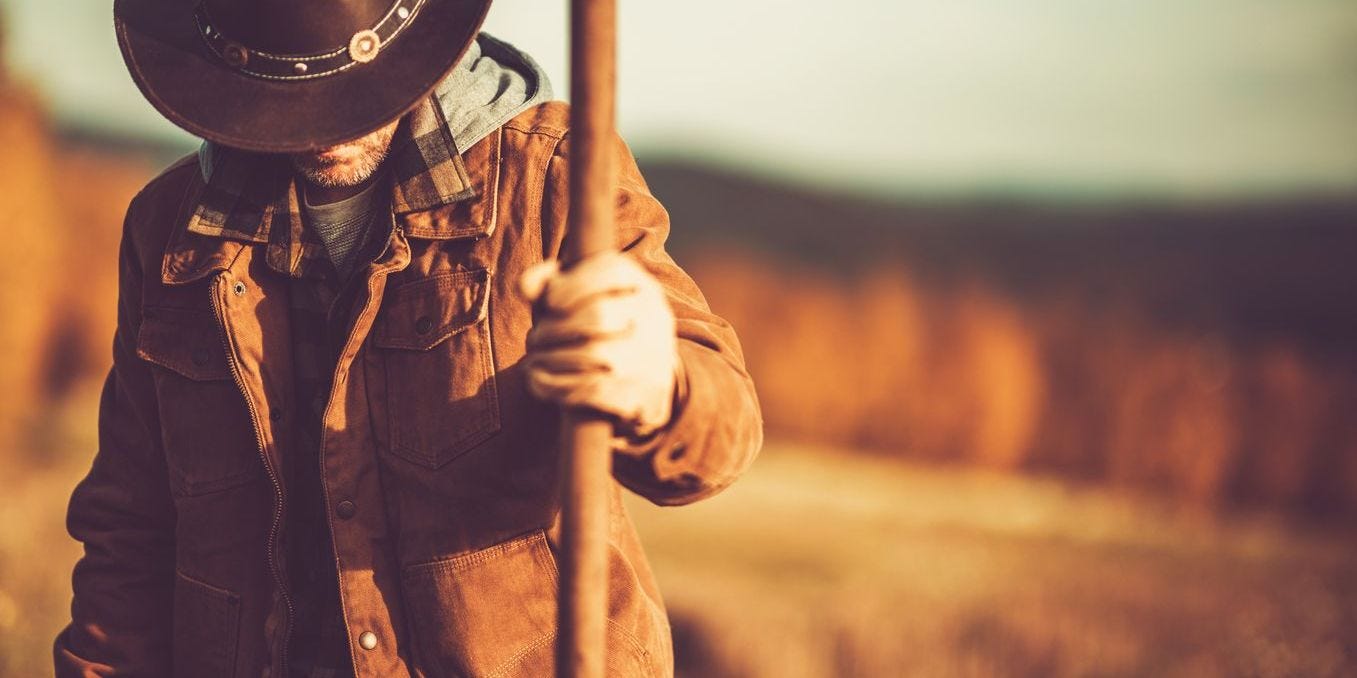
The thinking goes something like this: You can still extol the wonders of socialism and gender theory, but if you do it in a Carhartt jacket, sport a forearm tattoo, and smoke cigars, men will gravitate back to your party. If you use a chainsaw or an axe, all the better.
More importantly, the “Carhartt” approach assumes that American men are so easily manipulated by faux-masculine swagger that they’ll overlook substantive disagreements about the direction of the country.
Unfortunately (for these campaigns), men are capable of distinguishing between a candidate’s wardrobe and his policies. If a candidate embraces an open-borders policy that lets millions of unvetted fighting-age men into the U.S., something in most men recoils. The fact that the candidate eats barbecue ribs and drives a pickup truck might not undo that. If a candidate embraces biological males competing in sports against their daughters, most men will turn away. The fact that the candidate challenged the vice president to a weightlifting competition will only go so far.
This problem cuts both ways. If ongoing inflation keeps diminishing young men’s prospects of forming a family and providing for it, they may begin looking for alternatives – even to President Solo himself. A Republican can wear cowboy boots and a Stetson, but if he’s beholden to corrupt special interests, he’s still “all hat and no cattle” to many men.
To be sure, the deployment of masculine caricatures in politics is not new. For decades, we’ve seen campaign ads featuring candidates brandishing shotguns, cruising helmetless on motorcycles, and striding resolutely across farms and ranches. These have remained de rigueur in Republican politics. What’s novel is the newfound zeal with which some Democrats have embraced certain notions of bro culture.
Regardless, maybe we need to recalibrate our Solometer a bit, because it measures a brand of charisma, not character.
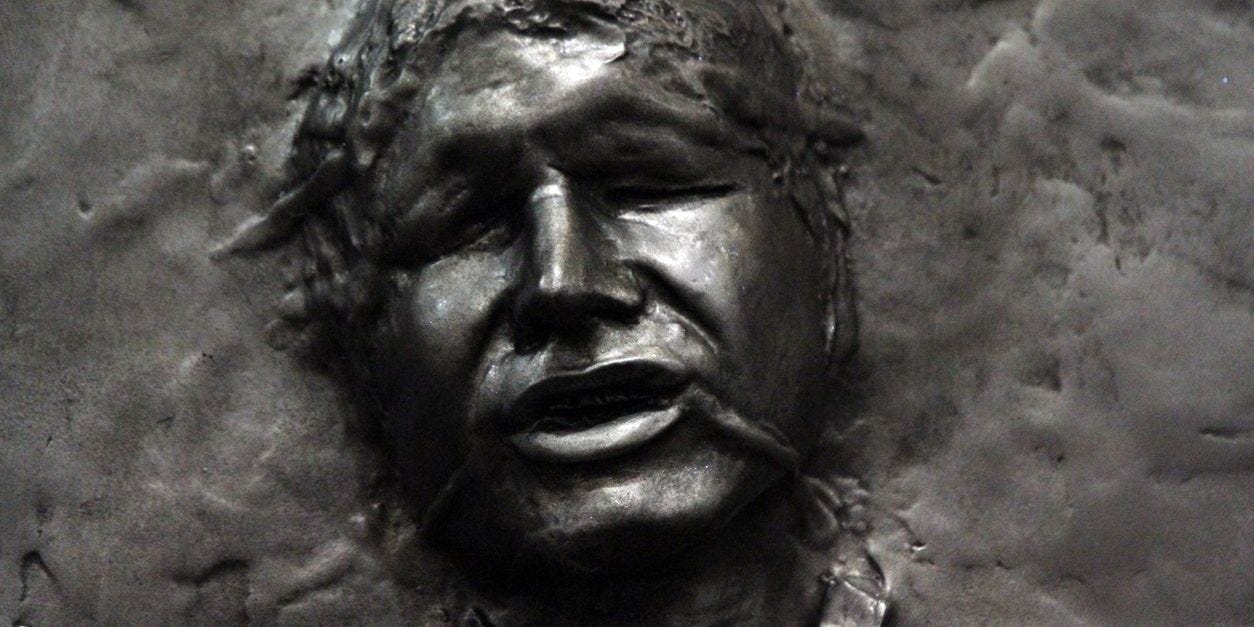
Han Solo wasn’t just an arrogant, shoot-from-the-hip gunslinger. He was flawed and relatable, yes – but also courageous, competent, authentic, self-reliant, and loyal. Despite his roguish claims of just being “in it for the money,” in the end he returns to save Luke and help destroy the Death Star against all odds. He exhibits fortitude and love for his friends as Vader casts him into the carbon freeze. And he grows in virtue with time and becomes a better man. (For what it’s worth, I’m ignoring anything produced after 1983.)
And that brings us to the heart of the matter. All the recent political posturing over masculinity suggests a larger confusion about what it actually means to be a good man. A recent Sutherland Institute survey found that only 54% of American men believe society has a clear definition of healthy masculinity. That’s a troubling finding for a society trying to raise boys into responsible, self-reliant, and virtuous men. We certainly can’t leave the question to apparently self-infatuated candidates driven by a lust for power, much less their shallow political consultants.
A man’s worth shouldn’t be measured by his biceps or bank account. As discussed in a recent episode of Sutherland’s Defending Ideas show, healthy masculinity embraces traditional virtues such as protecting others, providing for one’s family and accepting responsibility. Genuine strength emerges from fortitude, self-sacrifice, and a commitment to others. The measure of a man isn’t simply whether he possesses strength or power, but what he chooses to do with it.
Han Solo didn’t become a hero by swaggering across the galaxy with a blaster on his hip. He became a hero when he put his talents in the service of something greater than himself.
Peter Reichard is chief development officer and director of national partnerships at the Sutherland Institute in Utah. He has served as a public policy organization executive and researcher for 25 years.

This was fantastic. And it's funny they're trying this again despite the Walz disaster in '24.